18 min read · Updated
Surfing My Khe Beach, Da Nang: Season, Forecast, and What It Costs
My Khe is the beach in Da Nang where surfing actually happens — a sand-bottomed beach break that works from October through February and mostly sleeps through summer. This guide covers the season month by month, how to read a forecast for this stretch specifically, where to get a board if you don’t own one, and what it all costs, in real numbers. If you’re weighing bringing a board against booking a lesson, that answer is here too.
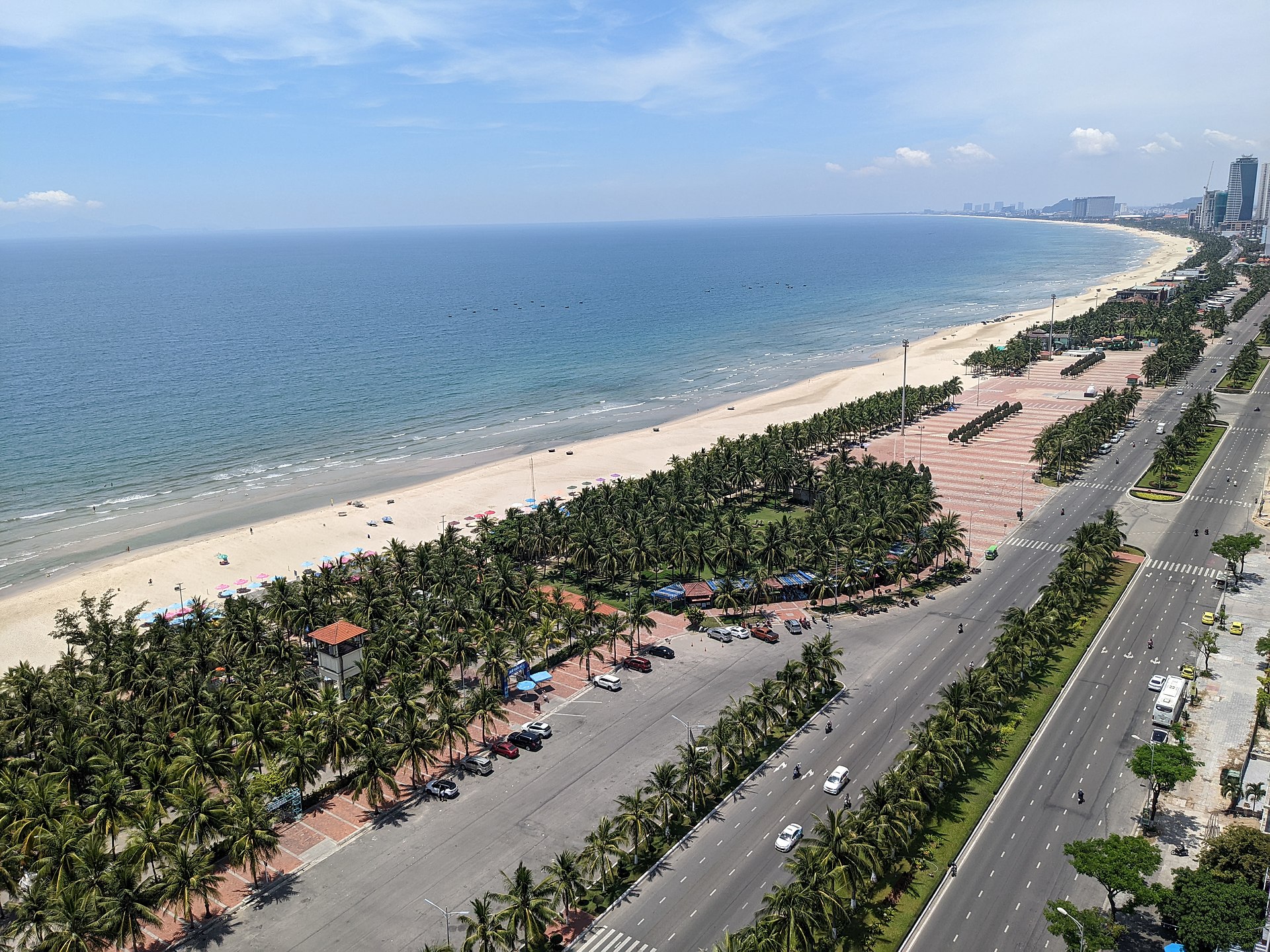 Photo: My Khe Beach Danang Coastline — CC BY-SA 4.0 · Wikimedia Commons
Why My Khe is Da Nang’s surf beach
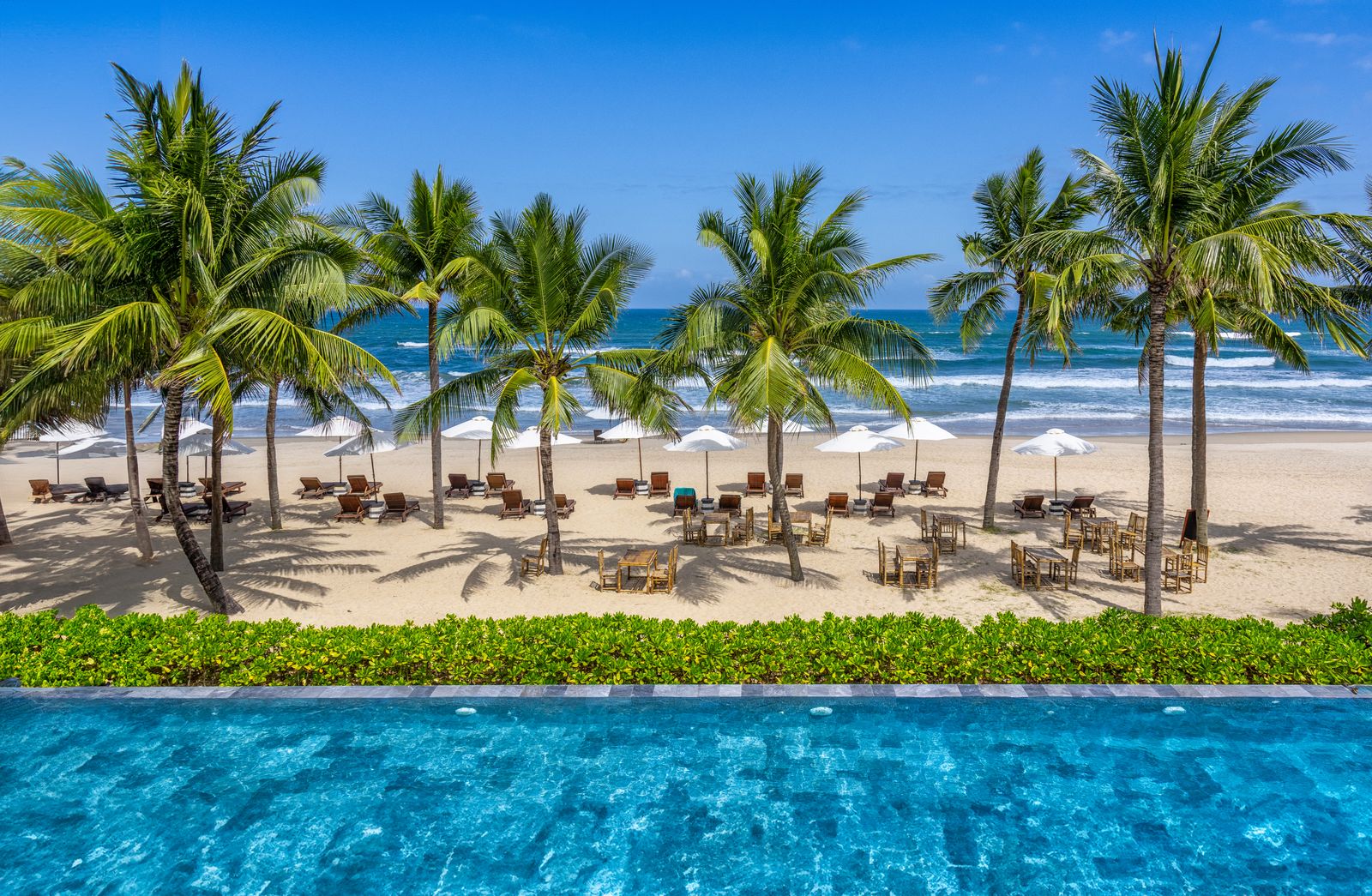 Photo: My Khe Beach, Da Nang, Vietnam by Ray in Manila — CC BY 2.0
My Khe is the city beach — an arc of sand that starts at the foot of the Son Tra peninsula at Man Thai and runs south past My An, where the hotel strip sits. Ten minutes from central Da Nang, which matters more than it sounds: a dawn surf here doesn’t eat your whole morning.
The wave is a beach break, sand the whole way out, with peaks scattered along the stretch. There’s no single “spot” to find. You walk past a few peaks, pick one without a crowd already on it, and paddle out. The sandbars shift after each big swell, so the best peak this month can be a flat one next month. That sounds like a flaw. It’s also why the water stays uncrowded even on days when the sand is packed.
Most of the year the waves are soft and forgiving — the kind of beach break you want when you’re standing up for the first time. During monsoon pulses they turn genuinely serious. The water stays warm in any month; boardshorts most of the year, and maybe a thin spring suit on the coldest January mornings.
The part other guides gloss over: My Khe is a seasonal surf beach. From October to February it’s a proper surf town beach — warm water, sand bottom, waves on most days. In summer the same beach can go weeks without a rideable wave, and pretending otherwise is how people waste a holiday. The rest of this page is about hitting the right half of the year.
Surf season in Da Nang: when to come
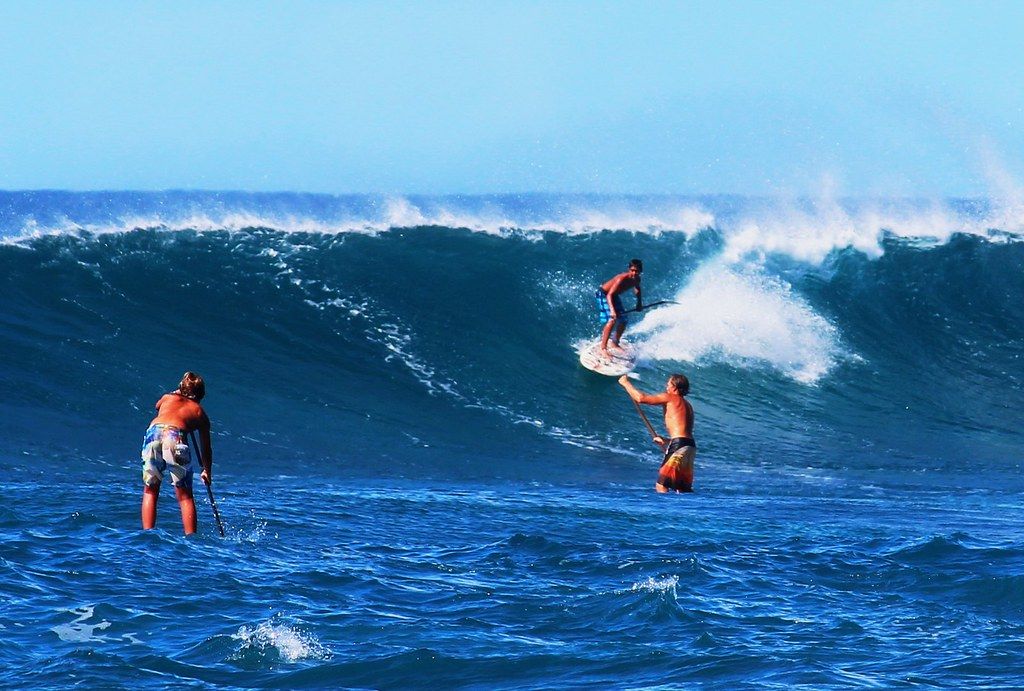 Photo: Stand up paddle surfing on the huge waves off Sunset Beach by Peggy2012CREATIVELENZ — CC BY 2.0
Short answer: October through February. The north-northwest monsoon pushes swell onto the central coast in those months, and that’s the only stretch where My Khe works with any consistency. It’s also the answer to the question people type before booking anything — can you surf in Vietnam? Yes, if you aim your trip at the monsoon.
Here’s the year, month by month:
January — Monsoon at full strength. Swell arrives in pulses a few days apart: big and wind-battered during a pulse, clean and manageable in the lull between them. Coolest month of the year, and Tet sometimes lands at the tail of it.
February — The monsoon eases. Fewer violent days, more clean medium ones, and the dry season starts. If you’re a beginner who wants real waves without November’s mood, this is a good month to be here.
March — Small and clean more often than not. Foamie weather. The expat high season is in full swing, so the sand is busy even when the water is quiet.
April — Last calls of the season. A stray pulse can still show up, but plan on small waves and the best pure beach weather of the year.
May — The summer pattern takes over: hot glassy dawns, onshore chop by late morning, mostly flat.
June — Flat most weeks. When something shows up it’s windswell — short, weak, disorganized. This is domestic beach season, which means paddleboard and swimming weather, not surf.
July — Same story as June, hotter.
August — Still summer. A distant storm occasionally sends a surprise set. Treat any August swell as a bonus, never a plan.
September — The hinge month. Monsoon pulses sometimes arrive early, and locals start checking the forecast again. If you’re already in Da Nang in September, look at the swell chart daily — you might catch the season’s first real day.
October — The season opens. First proper pulses, sometimes big straight away. The first week of October is Chinese Golden Week, so the sand is at its busiest just as the swell returns. The rain comes back too.
November — The heart of it: the most consistent swell of the year in most years, and the wettest stretch as well. Big enough that beginners should pick their days between pulses rather than through them.
December — Still deep in monsoon. Reliable swell, warm rain, and the year’s biggest crowd of surfers around Christmas and New Year.
Two calendars overlap on this beach, and it helps to know both. The surf calendar runs October to February. The tourist calendar runs October to April — expat high season, plus two spikes: Golden Week in early October, and Tet, the Lunar New Year, which falls in late January or February depending on the year and rearranges the whole country around it. Summer flips everything: the sand belongs to Vietnamese families on holiday, and the water sport that makes sense out there is the flat-water kind.
All of the above is pattern, not promise. The monsoon sets the schedule and it moves year to year — check the forecast before you build a trip around any single surf day.
Reading the forecast
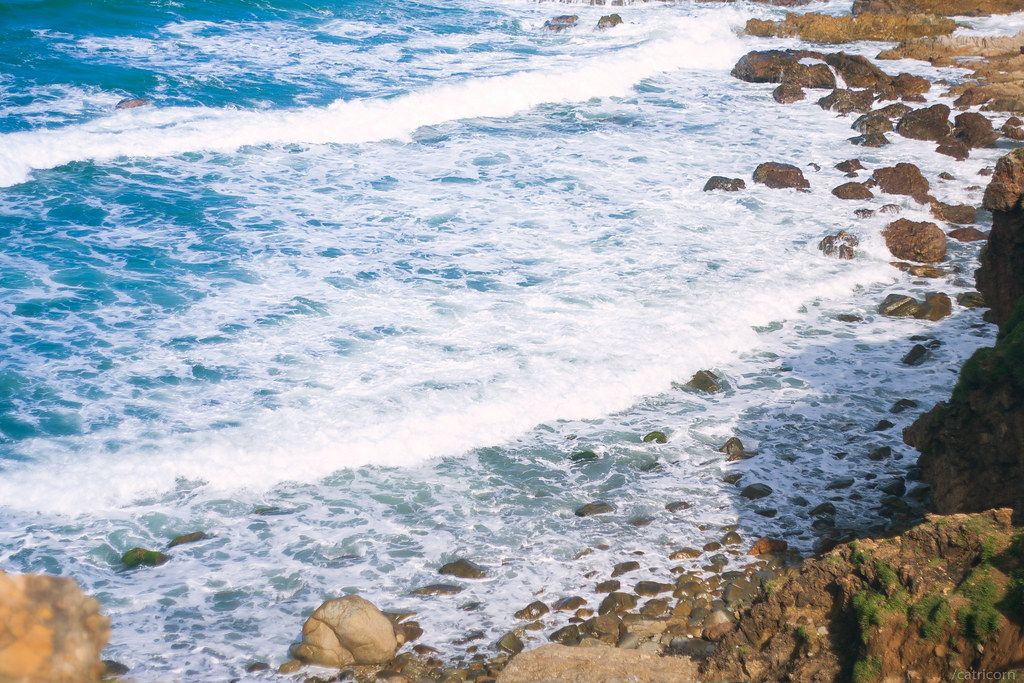 Photo: Sea by Catricorn — CC BY 2.0
Two free tools cover Da Nang well: Surfline (surfline.com) and surf-forecast.com. Search either for “Da Nang” or “My Khe”. For a live look at the beach, search “surfcam da nang” — there’s usually at least one camera pointed at the water. When the model and the camera disagree, believe the camera.
We don’t run a forecast or a cam and aren’t going to; these services do it well and they’re free.
What the numbers mean at this beach specifically:
Height. Forecast heights are offshore face heights, and My Khe is a beach break, so read them with slack. A 3–4 ft forecast is a comfortable intermediate day — head-high on the better sets, with lulls long enough to rest in. Once forecasts push past about 6 ft, expect much of the beach to be closing out and pick your spot — or your day — accordingly.
Period. This is the number that separates real waves from chop. Under about 8 seconds is windswell: short, weak, messy. Ten seconds or more is groundswell, and most of the season’s good days run 10–13 seconds. If the height looks modest but the period is long, the sets will hit harder than the number suggests.
Wind. My Khe faces east. Westerly wind is offshore and holds the waves up; a strong wind out of the northeast knocks them flat. Dawn is the window most days — the air is stillest early, and a clean chest-high wave at 6 am can be wind-mush by ten. Check the wind forecast, not just the swell.
Tide and sandbars. There’s no universal rule here. Which tide works depends on which sandbar, and the bars shift with each new swell. Two or three sessions at the same peak will tell you more than any guide can.
Where to rent a board (and what it costs)
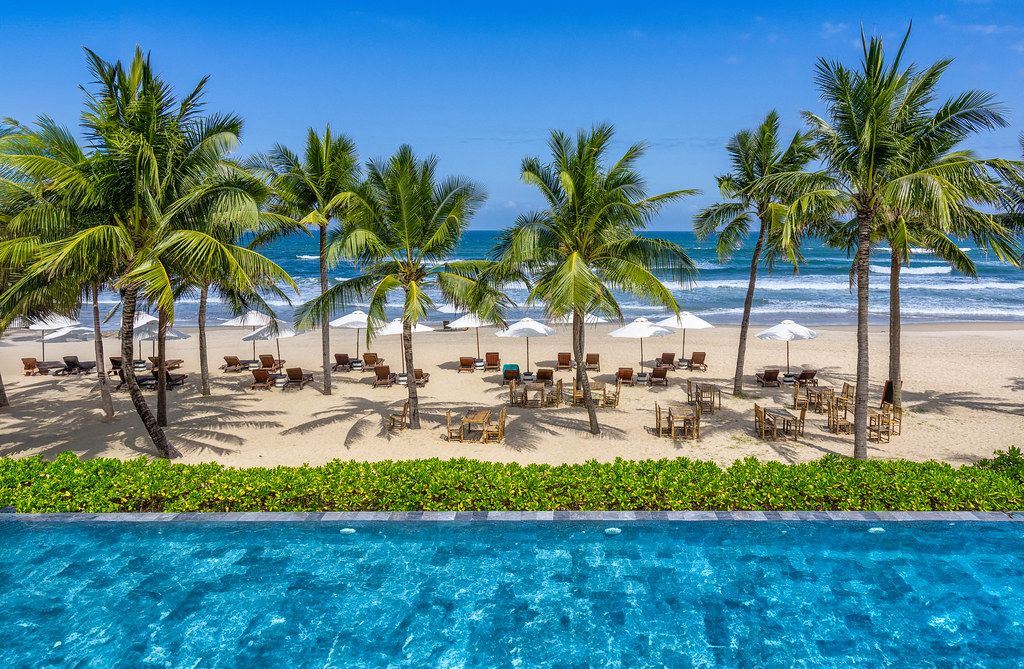 Photo: My Khe Beach, Da Nang, Vietnam by Ray in Manila — CC BY 2.0
If you own no gear and want to surf today, the short version: book a lesson. At Nhi Local the board comes with it. Board-only rental exists too, and this section names who does it.
First, the disclosure: Nhi Local doesn’t rent surfboards standalone. Lessons come with a board, paddleboards rent by the hour, and that’s the whole offer. We’d rather write that down plainly than take a booking we can’t serve.
For board-only rental near My Khe and My An, the name to know is danasurfrental.vn. Rental is their main business, not an add-on, and they keep a blog about surfing here that’s worth a read before your trip. We don’t quote their prices: their prices are theirs to set and ours to get wrong. Check their site or send them a message.
The prices we can stand behind are our own:
| What | Cost | What’s in it |
|---|---|---|
| Surf lesson (Nhi Local, at My An) | $65 / 60 min | board, leash, coaching, photo/video — nothing added at the end |
| SUP rental (Man Thai Beach) | $15 / hour | board, paddle, life jacket |
And the decision, spelled out:
Never surfed. Book the lesson. You bring swimwear and a towel; the board, the leash, and someone who knows this beach are part of the price. Learning alone on a rented board is the harder version of the same morning.
Surfed before, no board with you. Board-only rental is the move: danasurfrental.vn is the shop for it, or ask the schools in the next section — if they can’t help themselves, they’ll know who can.
Flat summer day. A rented surfboard is money spent on nothing. The $15 SUP hour at Man Thai is the way to stay on the water that day.
Learning to surf at My Khe: lessons & schools
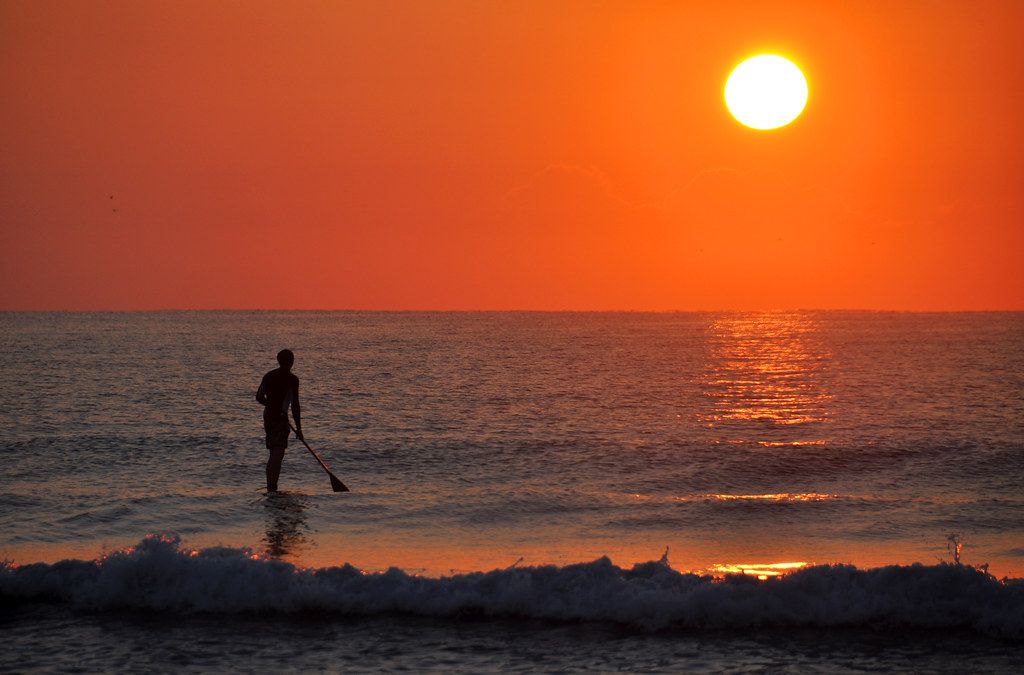 Photo: Wrightsville Beach, NC by James Willamor — CC BY-SA 2.0
Lessons run out of the My An end, where the bottom stays sandy all the way out and ordinary days serve soft waves — exactly what a first attempt needs. In a monsoon pulse the beach firms up everywhere, and the schools know when to run and when to wait.
Five questions separate a good school from a cheap quote. They’re the same conversation with any of them:
- Is the board in the price? Some quotes are tuition only, board extra. Ask “board and leash included?” and listen for a yes without an asterisk.
- How many students per instructor? Ask for the ratio. One instructor to a small group is a lesson; one to a dozen is a queue with occasional feedback.
- Where exactly do you meet? My Khe is kilometers long. A “My Khe lesson” that starts a ride across town from your hotel is a different morning. Get the meeting point before you pay.
- Photo and video — included or extra? You’ll want them. First days of surfing are comedy, and the clip of your first real ride is the souvenir that lasts.
- What happens when the ocean says no? A flat day, or one that’s too big, should mean a reschedule on fair terms. Ask the policy before paying, not after.
Now the directory. These schools all operate at the My An / My Khe stretch. It’s a directory, not a ranking — each runs its own schedules, group formats, and prices, so confirm details with each one:
- Epic — surfdanang.com
- Surf Feeling — surffeeling.com
- Coco — cocosurfdanang.com
- Go Surfing — gosurfing.vn
- Sano — sanosuphouse.com
- Surf Club — danangsurfclub.com
- Danang Surf School — danangsurfschool.com
- Wave Riders — waveriderssurfschool.com
- Nhi Local (us) — $65 for a 60-minute lesson at My An. Board, leash, coaching, and photo/video are inside that single price. One instructor, small groups, so question 2 above answers itself. Book in English at cal.com/nhi-local, in Vietnamese via Zalo.
What each shop carries beyond lessons — the details that never make it into the booking listings. Where a cell says ask, the fact isn’t published anywhere verifiable, so ask the shop directly rather than take this table’s word for it:
| School | Lesson board in price | Board-only rental | Extras beyond surf | Hours |
|---|---|---|---|---|
| Epic | ask | ask | — | ask |
| Surf Feeling | ask | ask | — | ask |
| Coco | ask | ask | — | ask |
| Go Surfing | ask | ask | — | ask |
| Sano | ask | ask | — | ask |
| Surf Club | ask | ask | — | ask |
| Danang Surf School | ask | ask | — | ask |
| Wave Riders | ask | ask | — | ask |
| Nhi Local (us) | yes — board, leash, coaching, photo/video in the $65 | no — see the rental section above | SUP rental $15/hr at Man Thai | online booking (cal.com / Zalo); hours not published — message first |
One entry worth its own line: LST Surf, on this stretch, keeps a concrete skate bowl at the shop and functions as a local hub — the kind of place where the session continues on land. It comes up by name in local threads (as does Coco). Confirm opening hours with them before you go; shops here keep surf-season hours that shift with the swell.
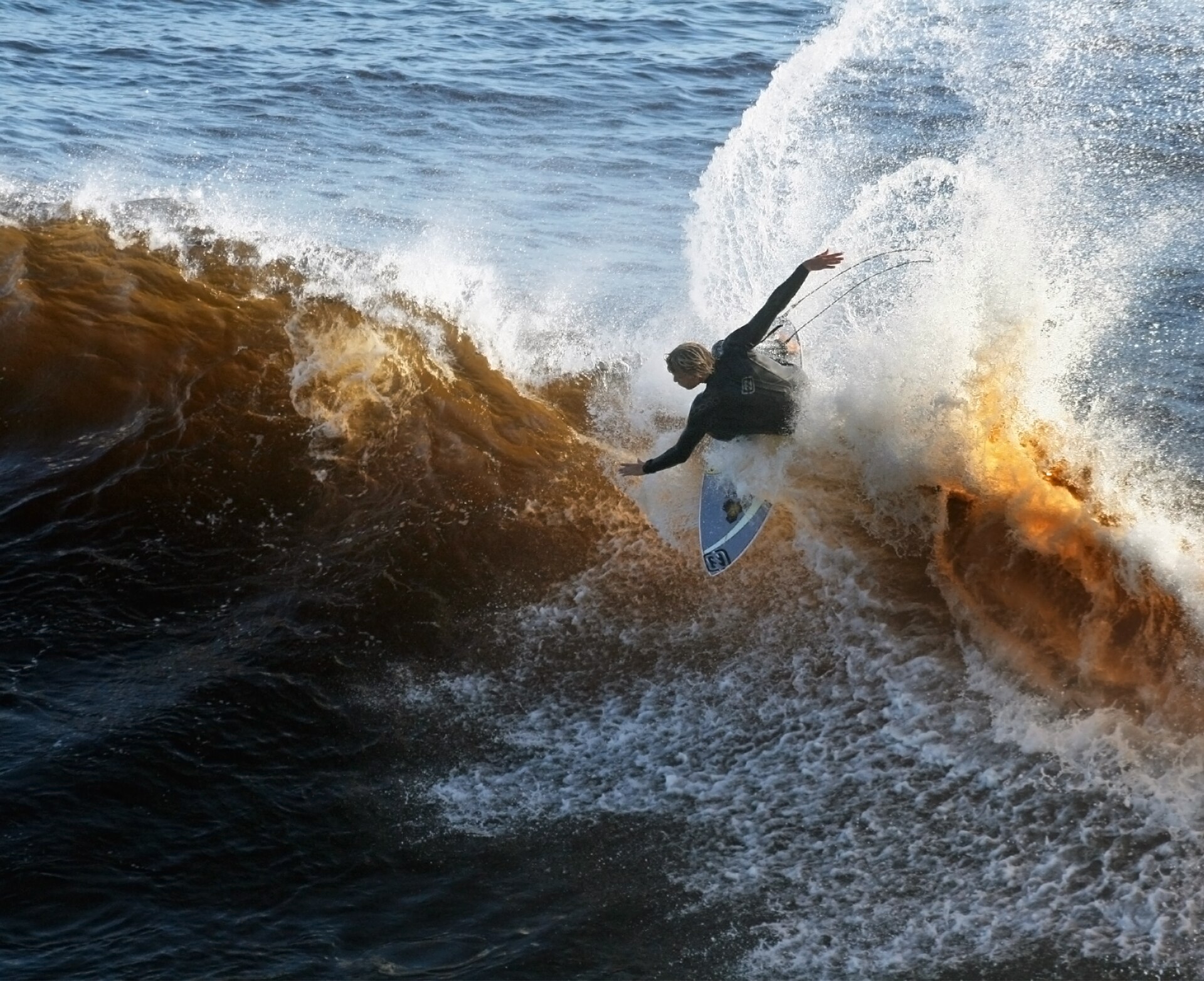 Photo: A surfer at the wave — CC BY-SA 3.0 · Wikimedia Commons
FAQ
Is Da Nang good for surfing?
Yes, for roughly half the year — which is a straighter answer than you’ll get from a hotel website. From October to February the monsoon pushes real swell into My Khe: warm water, sand-bottom beach break, surf schools running every day. From May to August it’s usually flat, and the better use of a summer morning is a swim or a paddleboard. It isn’t Bali-consistent. But warm water plus soft sand plus forgiving waves makes it an easy place to learn, in season.
Can you surf in Vietnam?
Yes. Vietnam isn’t a surf country the way Indonesia is. Most of its 3,000-odd km of coast stays flat or wind-chopped outside storm season, but the central coast around Da Nang catches a genuine monsoon swell from October to February. Da Nang is where that season is best served: a surfable city beach, schools, and warm water year-round. If you want to surf in Vietnam, start there.
When is the best time to surf in Da Nang?
Depends what you’re after. For big waves, November to January is the window, and the wet days come with it. Beginners do better aiming between pulses in any monsoon month, or later: February and March still deliver, just smaller and cleaner. One booking note either way: Tet (late January or February, dates move every year) sends domestic travel soaring, so rooms and lessons fill early around it.
When is surf season in Da Nang?
Roughly October through February, driven by the north-northwest monsoon. It doesn’t switch on one day — the swell builds through October, runs hardest from November into January, and fades through February and March. The month-by-month section above gives the feel of each one.
What are the best surf spots in Da Nang?
In the city, it’s one beach: My Khe, the whole arc from Man Thai down through My An. A beach break doesn’t have a single famous peak — it has sections that turn on and off as the sandbars move after each swell. The local method is low-tech: watch a couple of sets from the sand, then paddle out where it’s working and empty. For a first surf or a rusty one, the My An end is the easy entry, since that’s where the lessons run. An Bang, down near Hoi An, shows up in the same online conversations about spots here; read the next question before you plan a session around it.
Which is better for surfing, Da Nang or Hoi An?
For surfing, Da Nang, and it’s not a debate. Hoi An’s beach at An Bang is SUP water — sheltered and flat where My Khe catches the monsoon swell. Lovely for a paddle, nearly waveless for a surfer in any season. So base a surf trip in Da Nang. The two cities sit under an hour apart, which leaves Hoi An’s old town as a flat-day plan rather than a compromise.
How much does it cost to surf in Da Nang?
Real numbers, since most guides hide them. A surf lesson at Nhi Local is $65 for 60 minutes, and board, leash, coaching, and photo/video are all part of that one price. A paddleboard is $15 an hour at Man Thai, paddle and life jacket included. Other schools set their own rates and they change with the season, so ask when you book — we’re not going to print guesses. For board-only rental, danasurfrental.vn is the dedicated shop — check their site or message them for current rates. If you own nothing and want to try surfing once, the entire budget is one lesson and a towel.
Do you need your own board to surf in Da Nang?
No. Your experience picks the route. If you’ve never stood up, book a lesson; the board comes with it. If you already surf and need a board, that’s board-only rental: danasurfrental.vn exists for exactly that, and the schools listed above can point you somewhere if you ask them. What nobody needs to do is fly a board across the world for a week of beach-break peaks. Rent or book on the ground.
Can you surf at My Khe in the rainy season?
Yes — the rainy season and the surf season are the same months, and surfers are in the water through all of them. One thing to know about the start of it: runoff. When the first heavy rains of the season arrive, usually sometime in October, rainwater washes off the city and out across the beach, and along the Võ Nguyên Giáp stretch of My Khe this happens every year. The days right after a big rain bring murky water and the occasional piece of debris along the shore, and the local routine is unsentimental: wait a day or two, then look at the water. Clear means surf. Murky means give it another day. The rain itself is no reason to stop — the heart of the season, November to January, is also its wettest stretch, and everyone surfs through it.
Is it safe to swim at My Khe after rain?
Yes — after a wait. The local rule of thumb: give the water about 48 hours after a big storm before swimming. The reason is runoff. Early-season downpours wash the city’s streets down, and the drainage empties out across the beach; local reports from the beach community describe two street sewers draining into the sea along the Võ Nguyên Giáp stretch. None of this is new: it happens at the start of every monsoon, an annual pattern rather than a crisis. What locals actually do is simple: wait a day or two, then look at the water. The eye test — clear in, murky out — is the standard tool here, and the rainy-season FAQ above shows how the surf crowd applies it to those same weeks.
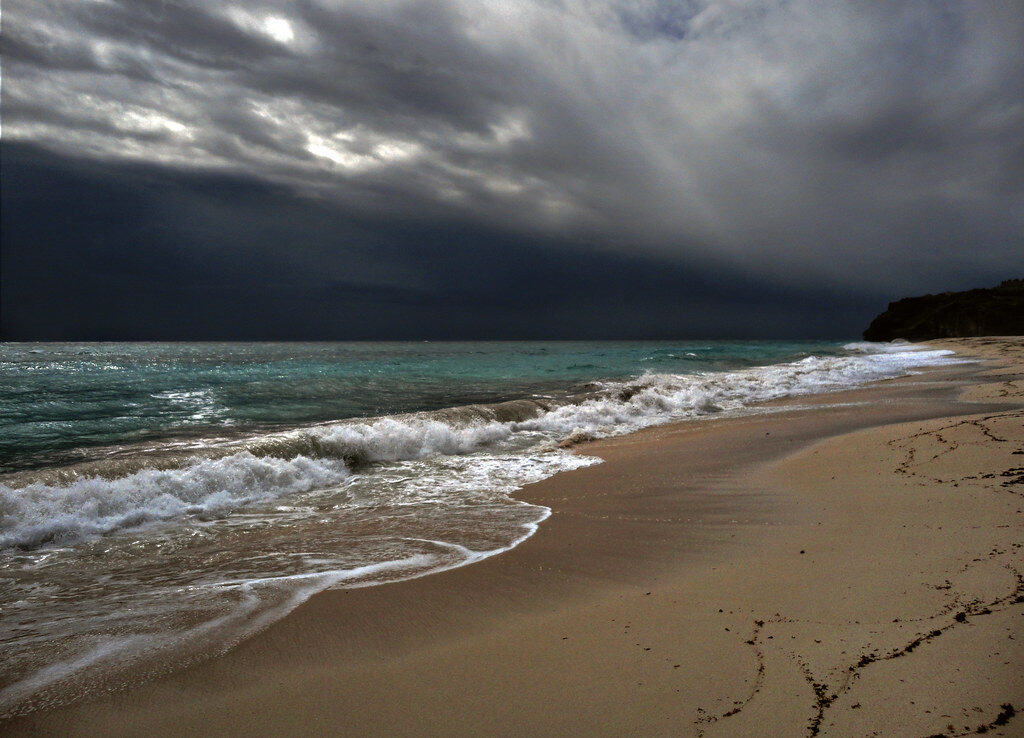 Photo: It does happen, rainclouds over Barbados — Ben124 · CC BY 2.0
Is My Khe beach polluted?
After heavy rain, temporarily yes — along the stretches where, by local reports from the beach community, the street drainage empties into the sea. That’s worst right after the season’s first big storms. On ordinary dry-season days, and on most monsoon days, the honest answer is: no more than any other city beach. One caveat we won’t paper over: there’s no published water-quality testing program for this beach that we can point you to. No regular bulletin, no dashboard. What the people who use the water daily go by is the eye test — clear means fine, murky means wait — and that’s why this guide leans on it too. Know when to wait and My Khe in season is a normal beach; treat every rainy week as a hazard and you’ll sit out the best stretch of the year for nothing.
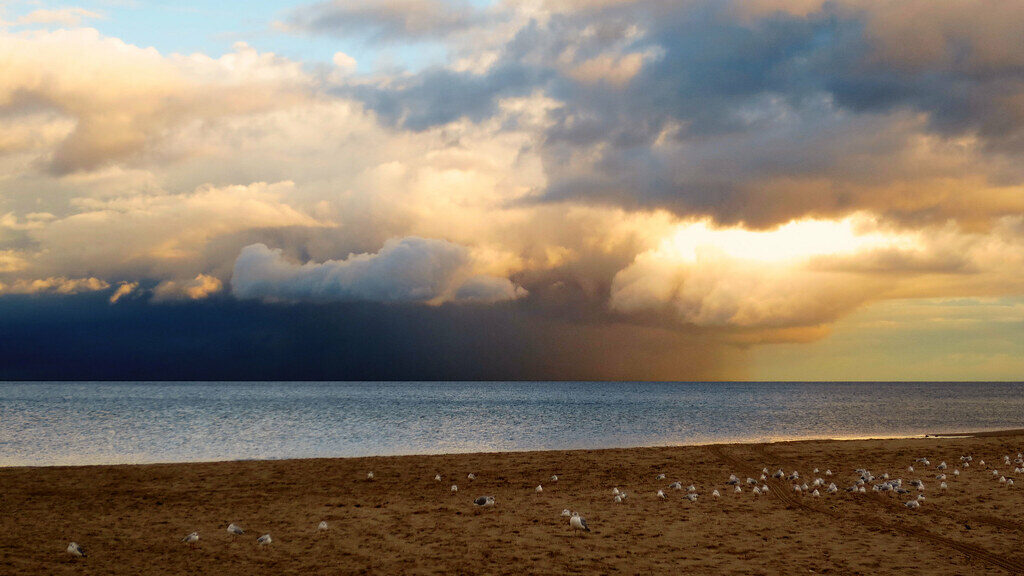 Photo: Suncloudy beach — piropiro3 · CC BY 2.0
What is in the water at My Khe after a storm?
Mostly runoff debris: wood, trash, whatever the streets shed — and it clears faster than people expect. This season’s local reports include wood with nails in the water after storms, which is why the quick check earns its keep. The routine costs nothing. Look over your landing zone before you paddle out, watch for floating debris near the shoreline where the current stacks it, and give your leash a proper tug before committing — a snapped leash strands you in exactly the water you were trying not to swim through. A day or two is the typical clearance. That’s still not a reason to write off the season: November through January is both the wettest stretch of the year and the busiest surf one, as the month-by-month table earlier in this guide lays out.
 Photo: Rest — Muse Rosli · CC BY-SA 2.0